
As we continue our recovery from the fall core aeration of the putting surfaces, a couple of great questions have been asked by our membership. One is the importance of this process for the long term success of our greens. Aeration and topdressing are not a popular cultural practice for the golfing public or the crew, but it is essential for consistent playability of these surfaces on a long term basis.
The number one reason for core aeration is the physical removal of organic matter, which enables us to replace this material with uncontaminated sand. If we do not perform this practice on a consistent basis, the organic matter levels will increase causing problems with the physical soil properties of the putting surfaces. This will lead to other problems such as disease, shallow rooting and most importantly to the golfer a soft, spongy playing surface. See picture below:
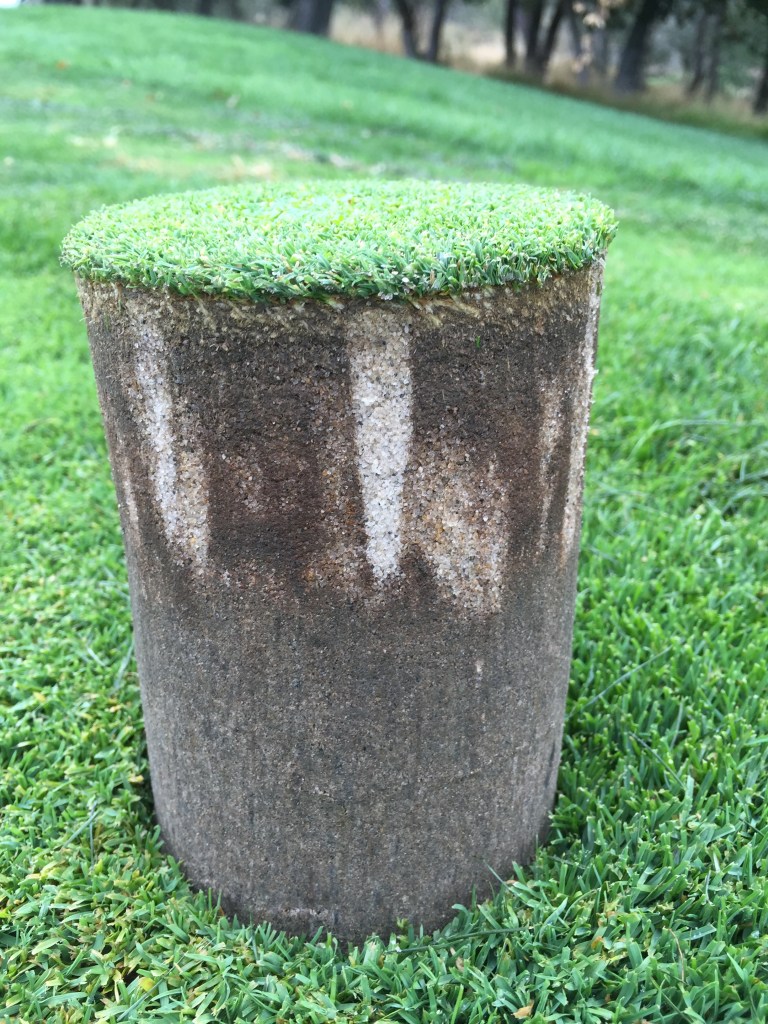
The grass is constantly producing organic matter through the normal growth process, so core aeration along with the need to input fresh sand into this environment will continue to be the most important cultural practice performed on a golf course to maintain quality putting surfaces. We appreciate your understanding and patience during this procedure.
Another question that was communicated was “Why does recovery take longer this time of year?” As I write this blog, we are arriving at our 4th week post the aeration procedure. Due to numerous events during the fall season, the team decided to perform the work in late October. This time of year brings along certain factors versus performing the work earlier in the season. Shorter days (less sunlight), cooler weather and soil temperatures are the biggest climatic factors that slow the recovery process. If you remember, the mornings of the 28th – 6th brought us low air temperatures (along with some light frost) from 31 degrees -38 degrees which severely slows down the growth process. Our average low temperature through the first 17 days of November was 39.2 and the average high was 73.6 with the overall average 52.4 F degrees. The average soil temperatures have been around 53 degrees. Those numbers have risen in the last several days to help facilitate the recovery process, so we are optimistic regarding full recovery in the near future. I hope this helps your understanding of the process and the factors that affect recovery time.
One other item I want to discuss is the Rapid Blight disease you see specifically on the 12th green.
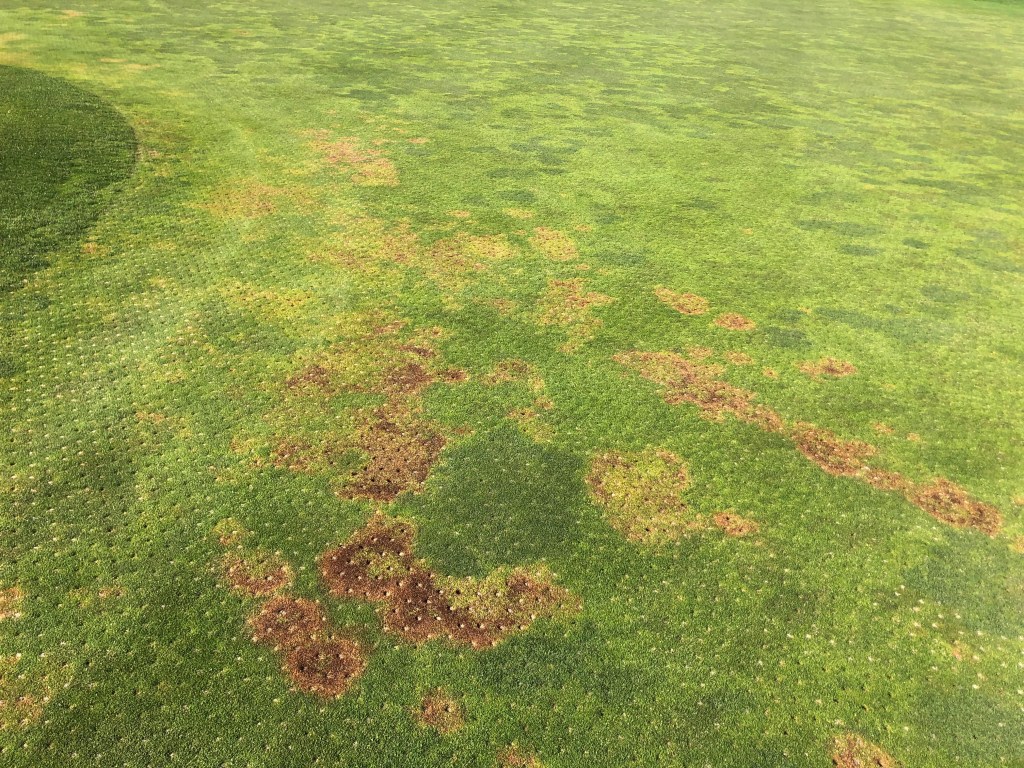
Rapid Blight is a microscopic organism that thrives when soils or water have elevated salt levels. Symptoms are more severe when poor water quality or amount of irrigation to the turf results in an increase in salinity in the soil. The pathogen can thrive in the range between 50 degrees F and 93 degrees F maximum daytime air temperature. This organism colonizes the foliage, crowns, and roots in affected areas. Along with the fact that we are still irrigating in November this year due to the lack of rainfall control is difficult as multiple fungicide applications are often needed to eradicate the pathogen from the crowns, upper roots, and thatch for complete control. With timely fungicide applications, plugging out the severe areas, and hopefully much needed rainfall from mother nature, we will have this under control and get the aesthetics back to normal on that green.
As always, we appreciate your feedback, which in turns helps us to decide what the next blog will discuss.
Yours in Turf,
Stacy L. Wallace, Golf Course Superintendent
 Sonoma Agronomy
Thanks Stacy.
Appreciate the updates
Good luck with the 12th green
Best
Peter
LikeLike