
As I sit and write this update, it is definitely beginning to feel like fall in Northern California. The days are getting shorter and we are seeing some rain in the extended forecast. Hopefully we experience a normal rain season as compared to the last two. In September 2014, California passed the Sustainable Groundwater Management Act (SGMA), requiring that groundwater basins throughout the state be managed by local agencies that are responsible for developing Groundwater Sustainability Plans (GSPs) if a basin has been designated as medium or high priority by the Department of Water Resources.
What is the Sustainable Groundwater Act? The Sustainable Groundwater Management Act (SGMA) requires that California groundwater basins identified as high or medium priority establish a Groundwater Sustainable Agency by June 30, 2017 and develop a plan for sustainable management by January 31, 2022. If the local GSA’s fail to follow the timeline, then the State Water Resources Control Board will step in and intervene in local groundwater management. The goal of SGMA is to have sustainable groundwater management by 2042.
As a club and a member of the community, we want to be part of the solution. We are in the initial stages of discussing a groundwater banking project with the local agencies. Conceptually, the groundwater banking program would involve the diversion and transmission of surplus Russian River water produced at existing drinking water production facilities during wet weather conditions (i.e., the winter and spring seasons) for storage in aquifers beneath the Santa Rosa Plain and/or Sonoma Valley. The stored water would then be available for subsequent recovery and use during dry weather conditions (i.e., the summer and fall seasons) or emergency situations. We do not know if we will be a viable candidate for this program, but realize the importance and want to do our part.
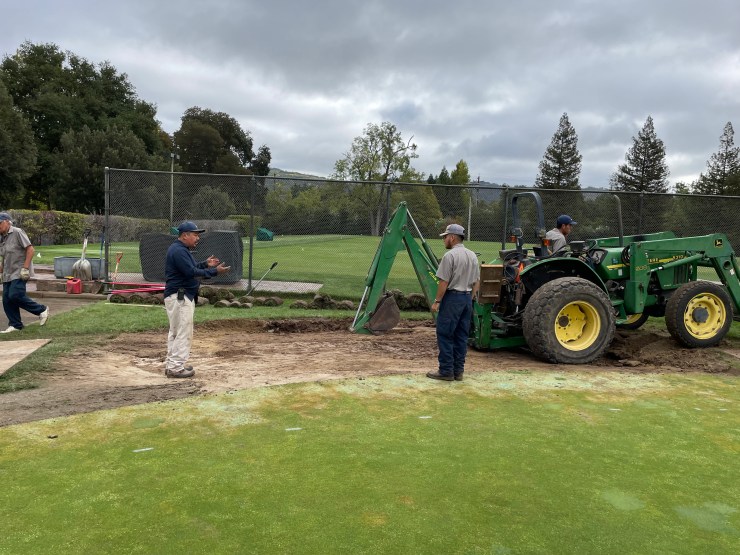
One project we implemented was the repair and regrading of portions of the putting green surrounds. In the picture above, this was an area on the northeast corner where the surround was mounded creating a bathtub situation on the edge of the green. We regraded the area and put in some new bentgrass on the green portion. The turf was maintained at a higher cut in the nursery, so it will take some time to get down to normal height. Please refrain from walking on the newly sodded areas until we remove the rope.
Since core aeration of the putting surfaces is around the corner, we want to discuss the importance of this process for the long term success of our greens. Aeration and topdressing are not a popular cultural practice for the golfing public or the crew, but it is essential for consistent playability of these surfaces on a long term basis.
The number one reason for core aeration is the physical removal of organic matter, which enables us to replace this material with uncontaminated sand. If we do not perform this practice on a consistent basis, the organic matter levels will increase causing problems with the physical soil properties of the putting surfaces. This will lead to other problems such as disease, shallow rooting and most importantly to the golfer a soft, spongy playing surface.
The grass is constantly producing organic matter through the normal growth process, so core aeration along with the need to input fresh sand into this environment will continue to be the most important cultural practice performed on a golf course to maintain quality putting surfaces. We appreciate your understanding and patience during this procedure.
Following is our fall core aeration schedule. It could possibly change due to weather conditions:
October 6 – Front nine tees.
October 7 – Back Nine tees.
October 18 – 20 : Aerate green surfaces.
Ocober 20 – until finished: Aerate fairways.
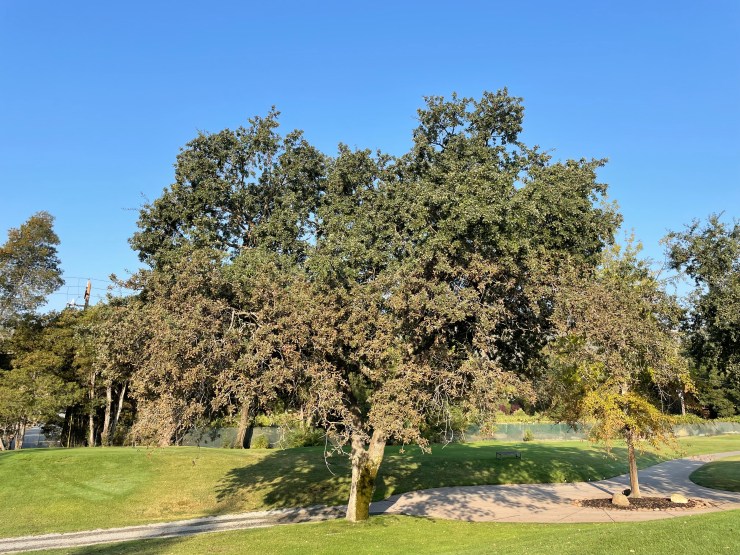
After fairways, weather permitting, we will begin aerating rough areas also. Along with the aeration programs, you will see the staff operating our seeder, seeding into stressed and high traffic areas before the fall rains begin. It has been a long and dry season, so hopefully we get the needed rainfall to flush our soils and promote turf recovery. Our trees are in dire need of some productive rainfall also. In the picture below you can see the damaged foliage that is affected by the irrigation water quality.
With all that being said, I am optimistic of where we are after the last two seasons of drought. Hopefully, we get some normal rainfall this season to help alleviate the ground aquifer issues. One last thing is a reminder that we will be implementing more cart path repairs starting October 12th.
Yours in turf,
Stacy L. Wallace, Golf Course Superintendent
 Sonoma Agronomy