
As I sit and write this, we have not received any rainfall in 40 days. Along with that we have had some unseasonable warm temperatures during recent weeks. The forecast is showing more normal temperatures the remainder of the month with no rain. The question is how this affects the agronomics of the golf course? Historically in Northern California, specifically Sonoma, we receive 28 to 32 inches of rainfall starting in mid-October and running through April. Some years we even see a little in early May. During the months of April – mid October the golf course is irrigated using well water, which has some quality issues especially during drought years when the reservoirs lower. In the last 10 years we have seen more dry years than normal seasons. As I have indicated in past communications, the amount of rain we receive during the season is critical from a reservoir standpoint. Agronomically (health of the turfgrass), it is more important in how much we get in February, March, April, and even May. The longer we can put off irrigating with the well water due to the quality of the source is critical for a healthier stand of turf through the dry summer months. This is especially important on our shallow rooted Poa annua putting surfaces that are mowed extremely low for playability.
One of the greens that has really struggled the last 3 years due to the drought and water quality is our practice putting green. Because of this we have made a conscious decision to limit how many putting green cups we have on the surface during certain periods to enable us to move the traffic wear around. Our practice green is a touch over 6000 square feet. Typically, you want 1000 square feet per cup on a practice putting surface so the cups can be moved to enable the previous area to recover from the traffic during the growing season (summer months). In the winter months, the turf sees little growth due to shorter days, cooler air and soil temperatures, so recovery takes longer. Currently we have 5 cups on the surface. Once the ground temperatures rise in the spring, we will add accordingly.
As I indicated above our putting surfaces are predominately the shallow rooted Poa Annua which are more disease prone than a pure bentgrass surface. Due to the fact that we have had to run some irrigation on them in February along with the warm temperatures last week we have seen early signs of disease on the surfaces that normally we do not see until June. Below are a couple of pictures of what we are experiencing.
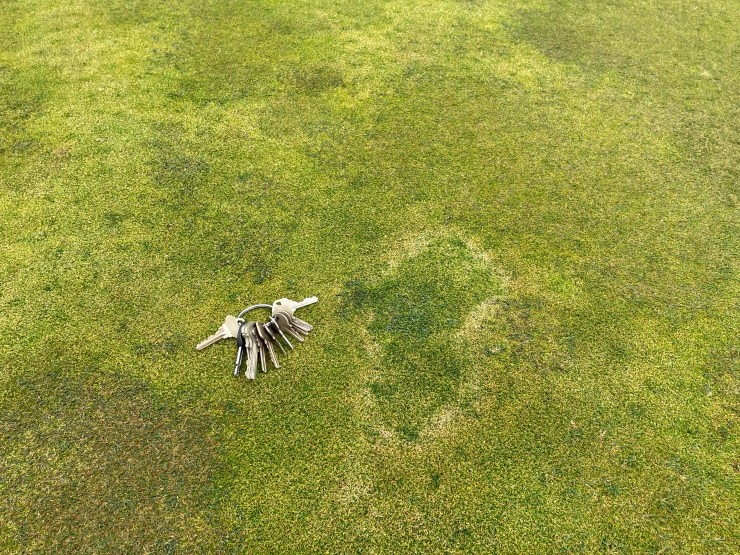
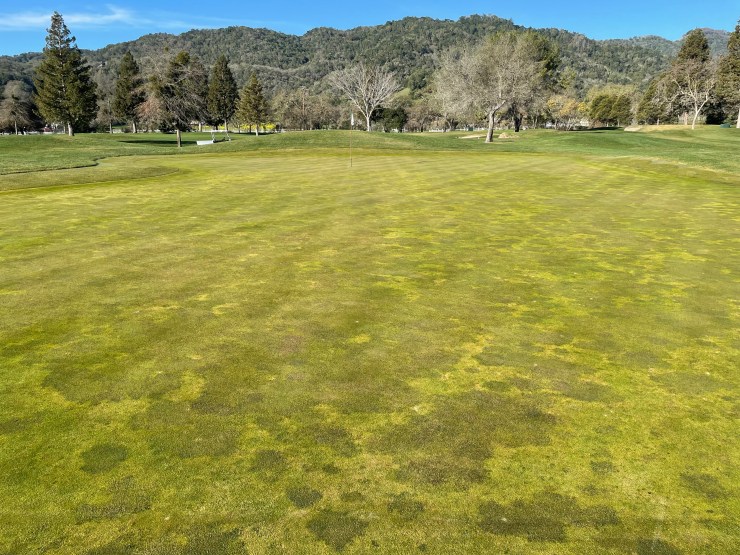
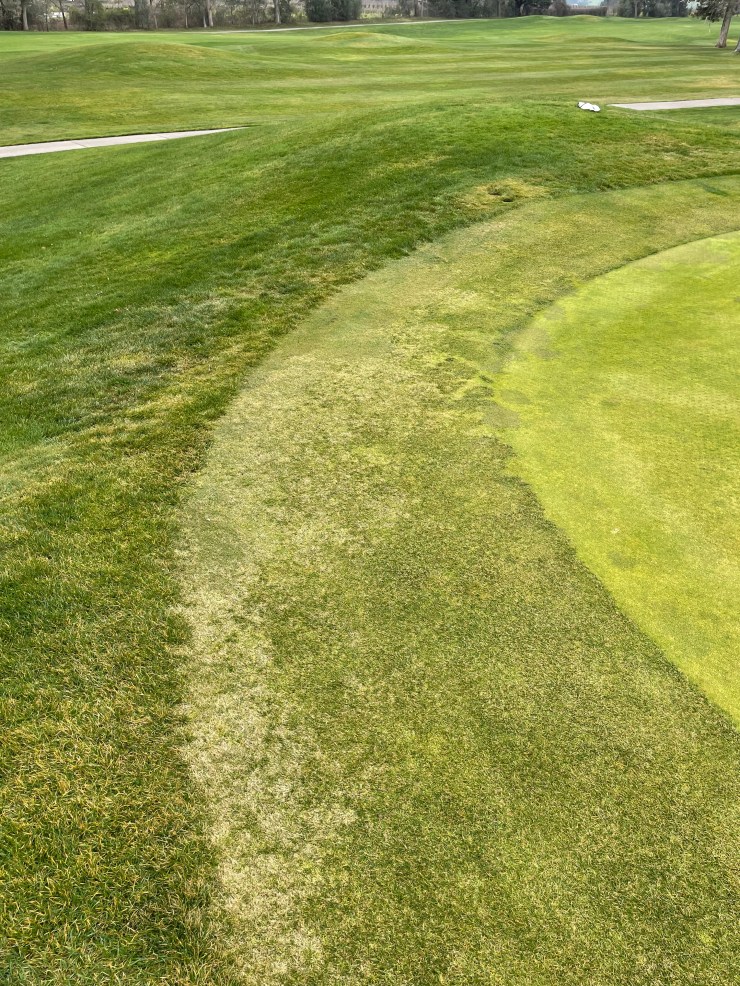
Hopefully March and April are more normal from a rain standpoint to help get through the 2022 golfing season.
Yours in turf,
Stacy L. Wallace, Golf Course Superintendent
 Sonoma Agronomy
Thank you for this detailed and insightful report
LikeLike