
As we roll into August it has been 3 months since we have received any significant rain. While this is normal in our Mediterranean climate, this is also the time of year we receive feedback regarding the conditions of the golf course which is mainly due to lack of rainfall from Mother Nature, an aging irrigation system, and water with high levels of Bicarbonates, Sodium, and Chloride.
As I stated in the past, the irrigation infrastructure is an aging system. The pipe, valves, and partial wiring in the ground are over 34 years old. The electronic controls, heads, and the remainder of the wiring are 19 years old. Due to the irrigation system, our localized climate here at Sonoma Golf Club, and the quality of our only water source, it requires many staff hours to get us through this time of year from an irrigation standpoint. Because of this you may not see every head, drain, or yardage marker edged. Especially in today’s labor market, we have to prioritize on a daily basis the most important items to get us through the day.
As I mentioned in the past, we rely on well water for our water source during the summer months. This can also be challenging due to the salt concentration levels. A lot of the wilt you see in the afternoon on this property is salt related. A good example of what salts do to the plant is having a glass of iced tea on a napkin and the napkin sticks to the bottom of the glass when you lift it up. Pour some salt on the napkin, which absorbs the moisture, and the napkin will not stick to the glass. The same thing is happening in the soil environment creating a situation where you get salt induced afternoon wilt, especially on warm days. On the positive side bad water is better than no water!
With all that being said, in recent weeks we had a site visit with the ownership group to show them firsthand the reality of our summer season here at Sonoma and communicate from both perspectives on how to move forward with the day-to-day challenges of this property.
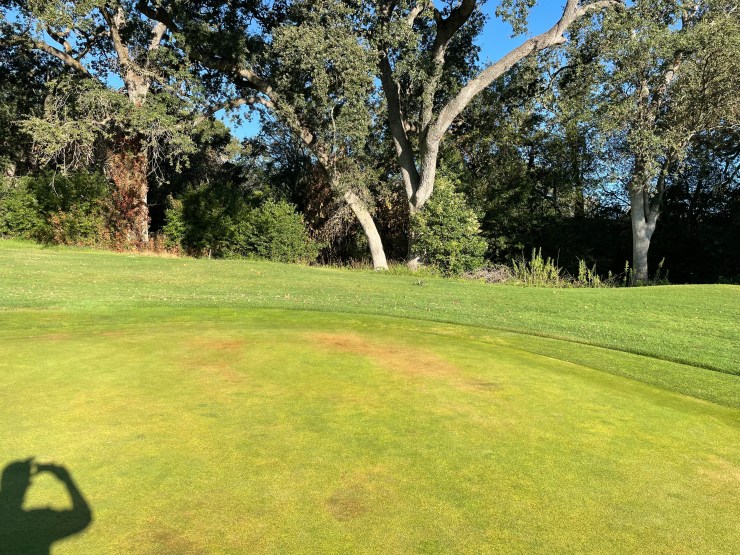
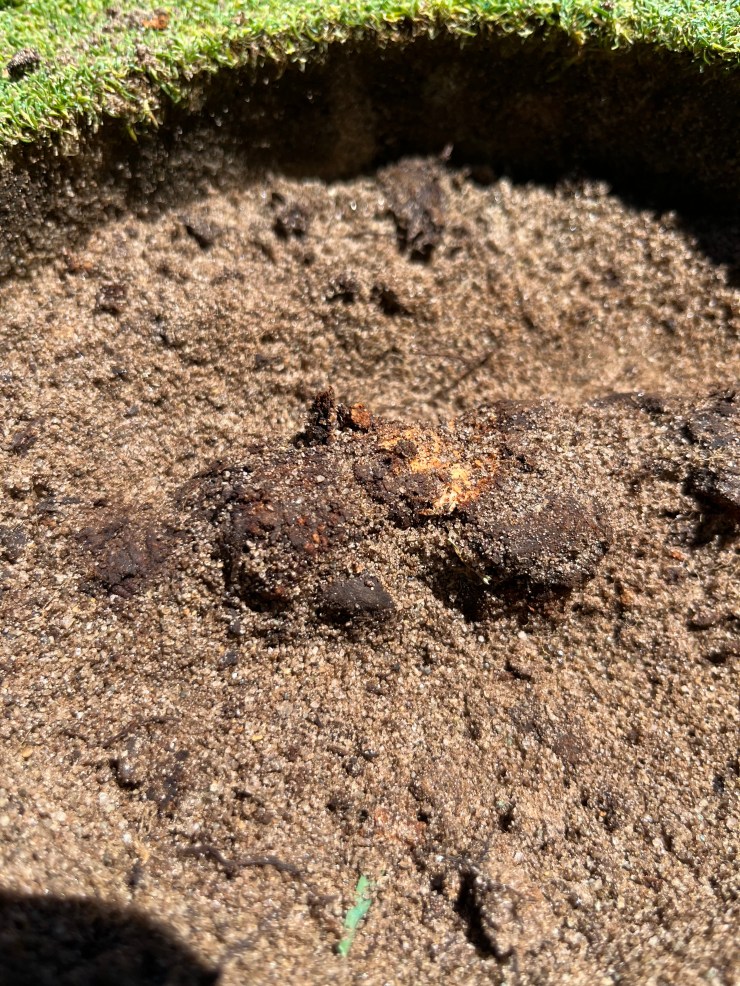
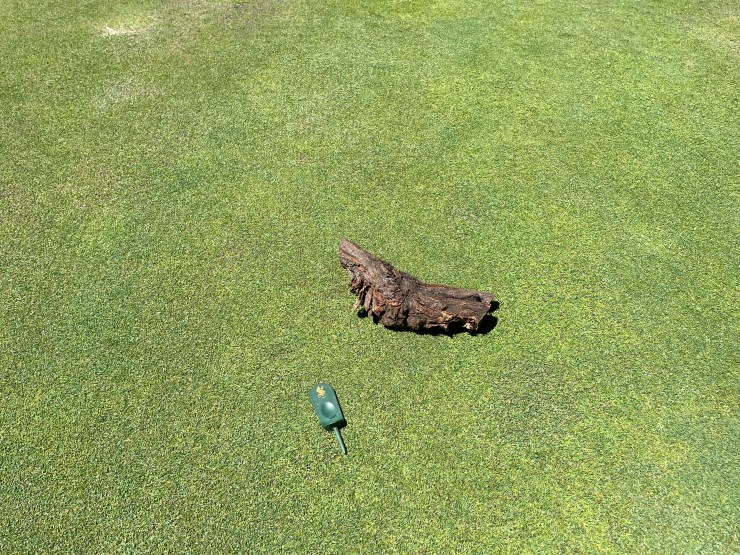
Another item to discuss is tree root competition and how this affects turf. As you can see in the pictures below, the tree roots tend to win the battle for water use versus shallow rooted Poa annua or any turfgrass. In the near future you will begin to see us root prune areas around several greens that are struggling the most form the tree root invasion.
Several members of the Sonoma team continue to receive comments regarding the Mistletoe, which is mainly affecting the non-native Pin Oaks. Many of you have noticed and communicated regarding the trees that have Mistletoe attached to them. I can remember some of the same trees being affected during my first tenure back in 2005. Mistletoe is a parasitic plant that tends to attack non-native species. After a thorough review of the trees that have Mistletoe on them, 95% are non-native Pin Oaks.
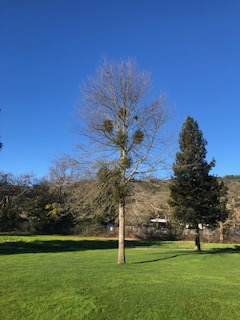
The native Live and Valley Oaks do not have any issues, so our long-term plan will be to remove the affected trees and plant the native species when a need arrives. That need will be determined by our golf course architect, ownership group, and on-site staff. The initial area we have agreed to implement this strategy is the corner of the dogleg on #15. This work will take place this fall when conditions are conducive to transplanting a native oak. Hopefully this gives you some insight into Mistletoe and why it becomes a problem when using non-native plant material.
Another item that we want to reiterate is our driving range tee protocol. Square footage is the main factor that determines how many stalls we can provide.
As you may already know, the rate of recovery on a driving range tee is appreciably slower than tees located on the course. When golfers practice within the confines of a stall, they remove divots from an area until the turf has been all but completely harvested. With so little vegetation left, recovery from underground portions of the remaining plant and/or seed takes much longer. By knowing the area of turf damaged on a daily basis, time of year, and the general rate of recovery, we will have essential guidelines for use to ensure a successful driving range tee program.
Those guidelines will include the following:
- Based on the square footage only 10 stalls will be used for all events and usage when using turf.
- Monday, Tuesday and non-member events will be synthetic turf use only. Member events such as shotguns that need more than 10 stalls will use the synthetic surface.
- The rear of the stall will be outlined with rope and usage must stay within those boundaries.
- During the winter months, we may have to increase the use of the synthetic surface based on amount of use, due to cooler soil temperatures and much slower recovery time. Heavy rain events will also require us to use the synthetic surface.
It will be very important that we strictly adhere to those guidelines based on our square footage, and the climate we have here in Sonoma to have a successful driving range tee program. Our plan for the tee due to past practices that led to complaints of standing in old divots, will be to start use on the front of one side of the tee, working to the back on half of the surface. Once we reach the back of that side, we will move to the front of the other half allowing us the most recovery time on the previous divots. Hopefully this provides some insight on the process.
If you have any items, you would like to see discussed in this blog please feel free to communicate.
Yours in turf,
Stacy L. Wallace, Golf Course Superintendent
 Sonoma Agronomy
Stacy, you don’t have an easy job.
I suggest that you propose to management
Filtration and conditioning system for the well water 2. Replacement of the main irrigation lines
Good luck!
Peter
>
LikeLike
I couldn’t agree more. I’m a new member and it would instill a lot of goodwill and faith in the parent company to see them make some significant capital improvements. Thank you and your team for making the best of a challenging situation. Can’t wait to see what the course looks like when it gets rain!
LikeLike