
As I write this update the weather forecast for the next few days is showing extremely warm afternoon temperatures coming our way starting today and going through next Thursday. For those of you using golf cars during this period, please be judicious with your cart usage on the turfgrass. The turf is already struggling from several months without rainfall and as communicated in the previous blog our irrigation water is high in sodium and bicarbonates. Due to the incoming heat and the issues discussed below, we are forced to have the green moisture higher than we would normally desire from a playability standpoint. Because of this they will be softer, therefore repairing your ball mark properly and immediately is critical. Below is a great video from the USGA on how to properly repair ball marks.
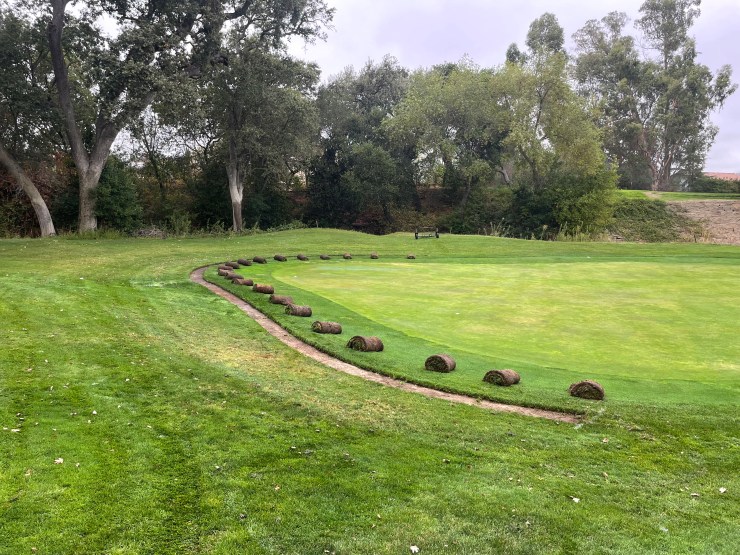
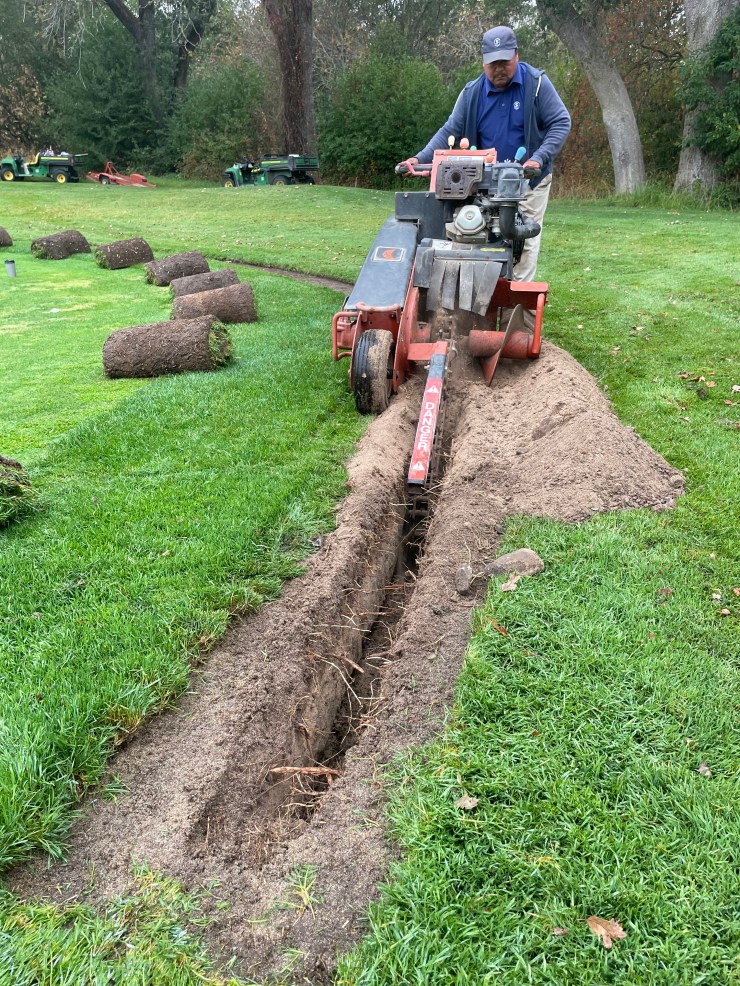
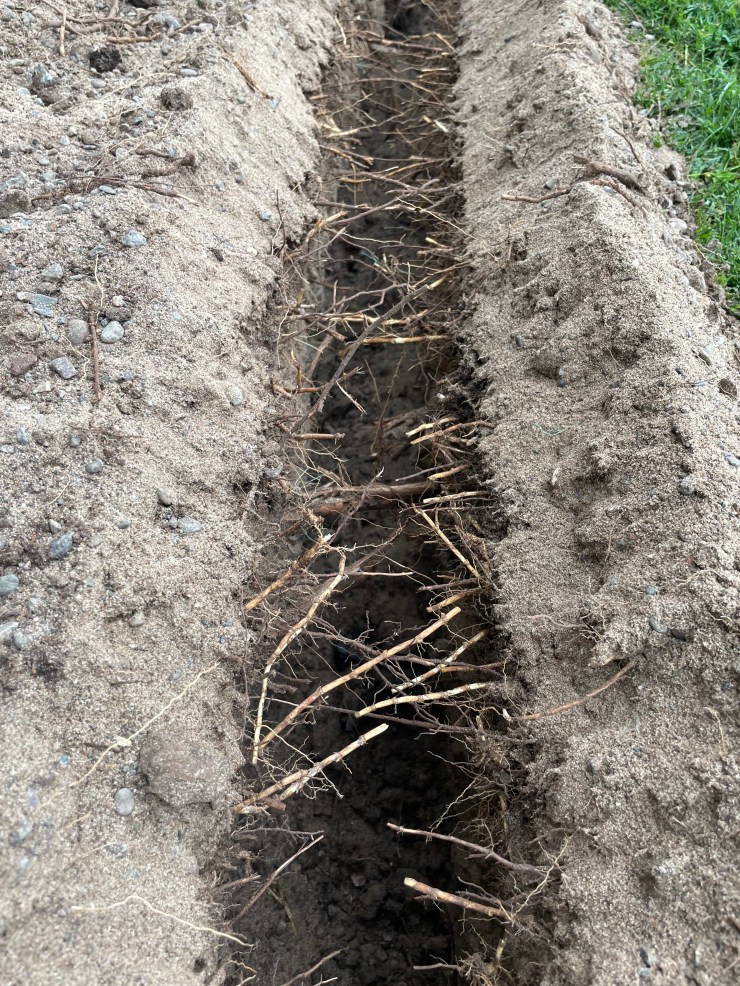
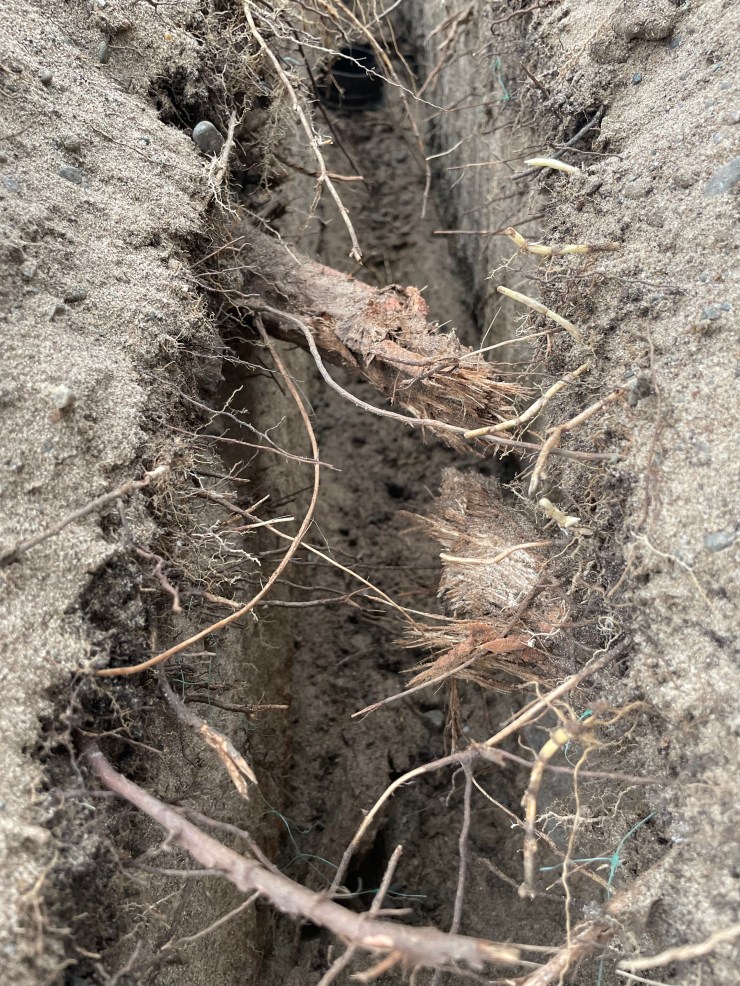
One of the tasks we performed in recent weeks is root pruning behind #7 green. This green has struggled this year due to its stagnant location, predominant Poa annua turfgrass, poor water quality and the tree root competition.
Another task we performed was sending in turf samples from the 3rd green to see what our nematode counts currently are. Nematodes are microscopic worms that live in the soil. While there are many kinds that are beneficial, feeding on fungi, bacteria, and other organisms, some harmful nematodes feed on plants. These plant-parasitic nematodes damage root systems and reduce a plant’s ability to get water and nutrients from the soil. The test results indicated we need to make some curative applications and start on a periodic testing program to keep these plant-parasitic nematodes in check. The nematodes are especially harmful to the Poa annua plant due to its shallow rooting system. We suspect the issues we are having with the #7th green includes nematodes.
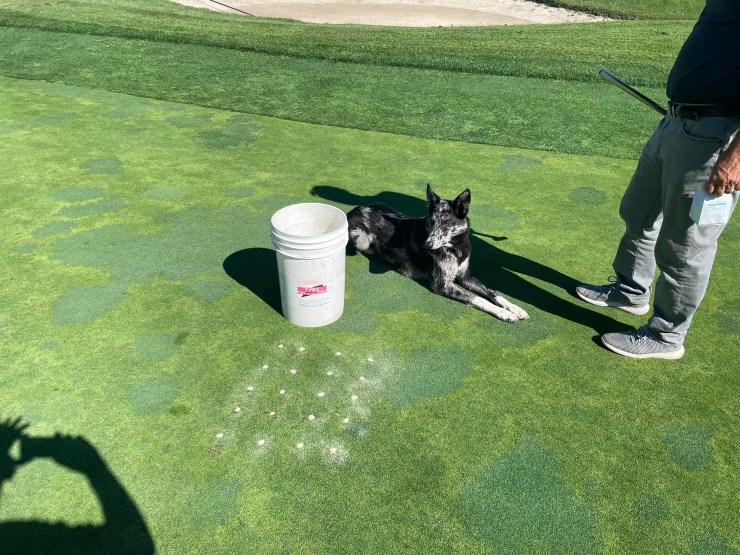
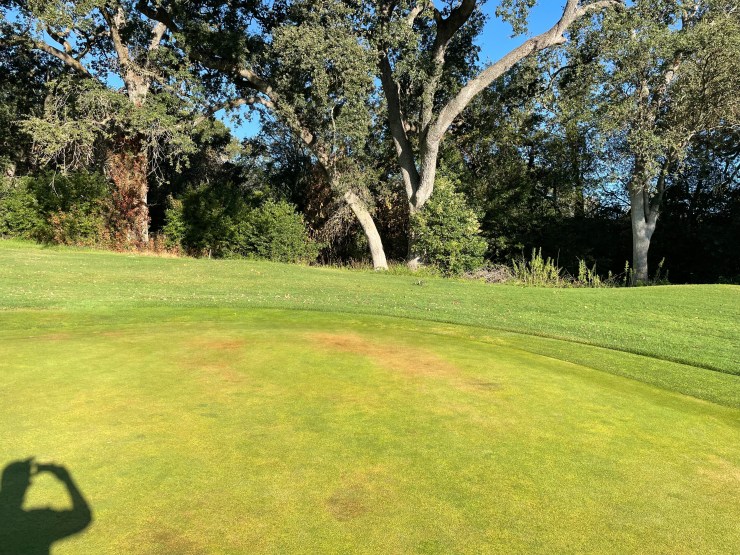
Once we get through the extreme heat period over the next 7 days, we will assess the overall condition of #7 green and determine what repairs, if any, need to be done. Fortunately, the worst damage is to the back 1/3rd of the green, so we will not be installing cups in that location for the time being until it recovers. Please take this into consideration when playing the hole and keep traffic in that area to a minimum when possible. Your cooperation is greatly appreciated. We will provide more information in our next blog mid-month.
Yours in turf,
Stacy L. Wallace, Golf Course Superintendent
 Sonoma Agronomy