
As I sit and write this, we are receiving another rainfall event from Mother Nature. Following are our totals since December 26th. All readings are recorded in the morning so the rain may be from the previous day:
- Dec. 27 – 4.3”
- Dec. 28 – .27”
- Dec. 29 – .25”
- Dec. 30 – 1.1”
- Dec. 31 – 2.7”
- Jan. 1 – .41”
- Jan. 3 – .41”
- Jan. 5 – 1.8”
- Jan. 6 – 1.1”
- Jan. 7 – .11”
- Jan. 8 – 1.3”
- Jan. 9 – 2.8”
- Jan. 10 – .43”
- Jan. 11 – .45”
- Jan. 12 – 1.05”
- Jan. 14 – 1.8″
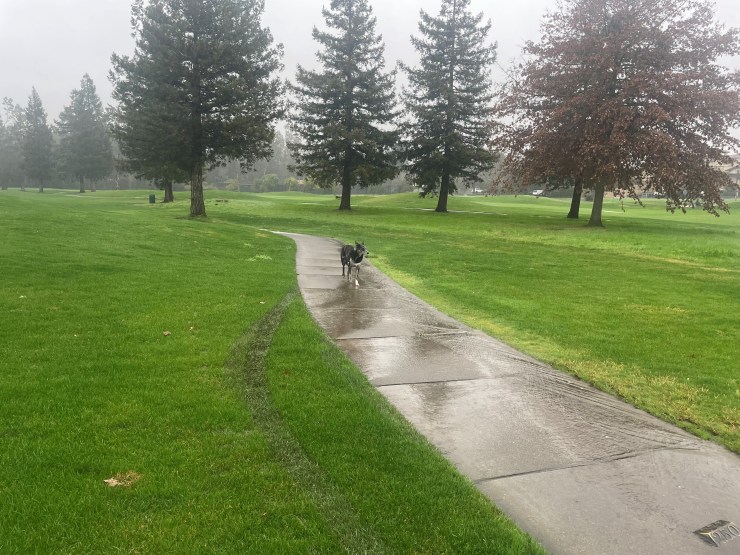
As you can see from the rain totals, the golf course is extremely saturated. Due to the saturation, it is extremely important to keep ALL FOUR WHEELS on the cart path. If you meet a member of the maintenance staff, they will move out of the way so you can stay on the concrete path. Thursday, we had someone pulling off the path several times as you see in the picture below.
It looks like we may be getting a reprieve from the rainfall next week. Due to the amount of rain we have received consecutively since December 26th, it will be some time before we will be able to get golf cars off the paths. On the positive side, this should help replenish the aquifers that supply our irrigation water. Our season total to date is 28.11inches as I write this.
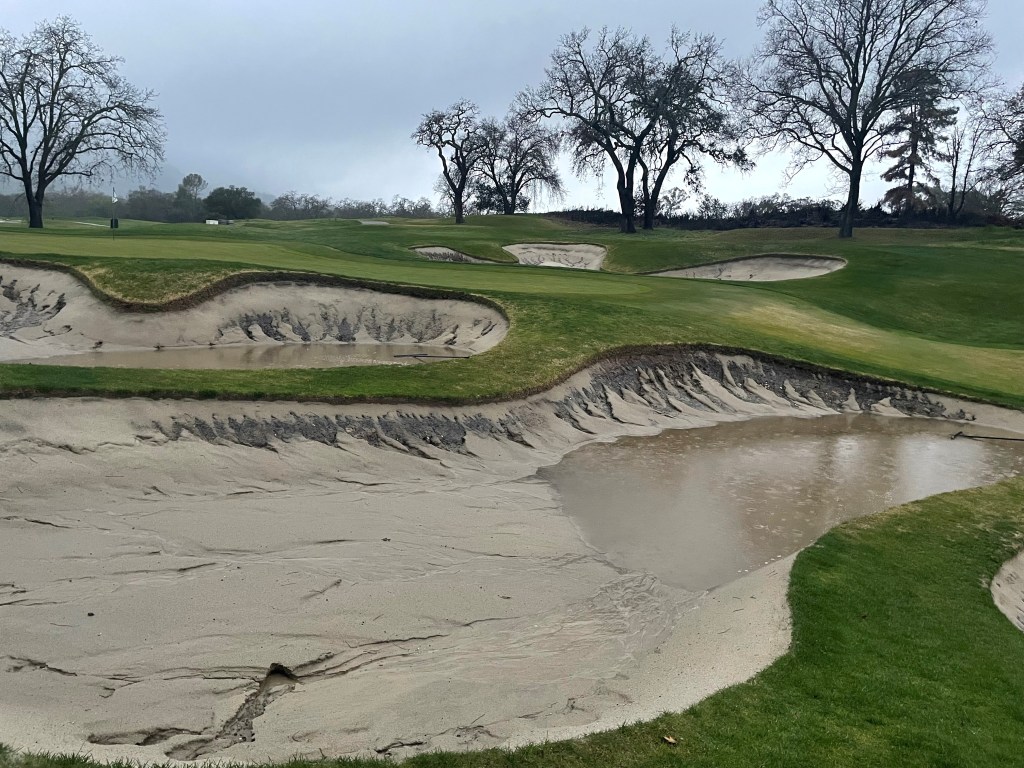
One of the questions we receive is “What do you do in weather like this?” Unfortunately, our current bunkers do not handle this amount of rainfall well, so a lot of time is spent repairing them from the storm damage as you see in the picture below.
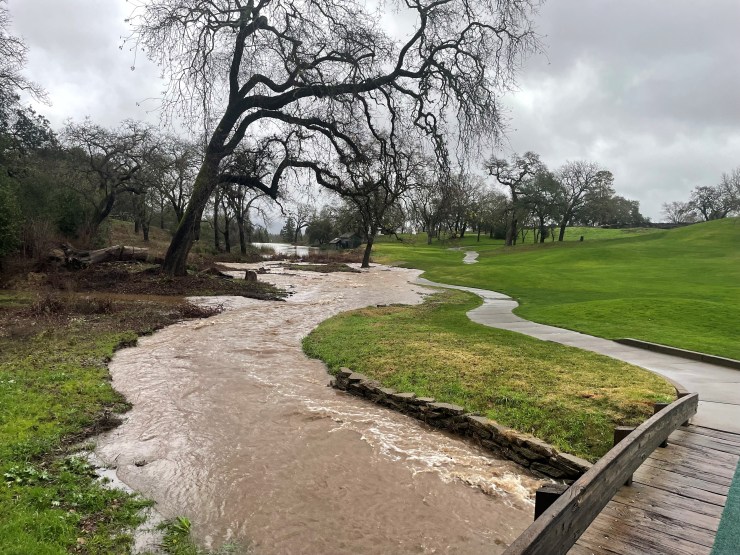
Along with our normal maintenance practices, which includes mowing areas that are viable for this procedure such as greens, tees, collars, and approaches, we have daily debris that needs to be cleaned up, so storm drains do not become clogged and stop functioning. In the picture below you see the amount of water flowing a the creek at Hole #7.
During the winter rainy season, numerous drainage issues become apparent that we do not see during the arid months of summer. In the picture below you can see a large root that compromised this drain line being removed.

In the following photo, the outfall (where water exits a drainage system) was partially compromised slowing the water from draining on the 16th green. Another positive from the volume of water we have been receiving are these issues showing up for us to repair. Partially compromised drainage systems are hard to detect during the dry summer months.
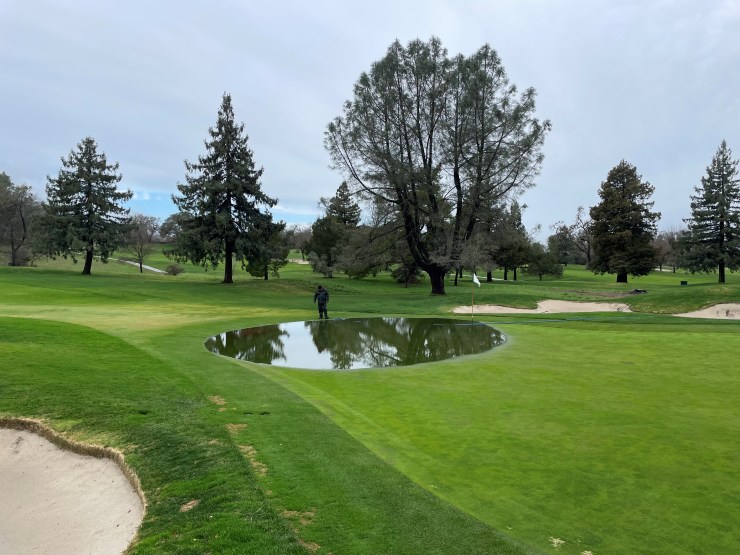
As you can see there are always required tasks to perform no matter what time of year it is. They may vary due to climatic changes, but definitely necessary.
Yours in turf,
Stacy L. Wallace, Golf Course Superintendent
 Sonoma Agronomy