
As I sit and write this, we are 20 days into the month of July. Twelve out of those 20 have reached the 100-degree mark with several days of over 100 degrees. To have this many days reaching these temperatures is unusual for July. My recent discussions with several long time Sonoma residents also indicated they have not seen anything like this. Due to these conditions the amount of water input on the golf course has also increased. As we have discussed in the past, our water supply has quality issues such as high levels of sodium, bicarbonate, chlorides, and boron. Since we have limited rainfall during the summer and early fall months, salts accumulate at the soil surface due to capillary rise of water and evaporation. Our most recent test show sodium levels are extremely high. Due to these conditions, when you see changing turf conditions throughout the day, you are seeing sodium/salt wilt. When the fall rains start, we see a natural leaching of these ions and improved turf conditions. The only efficient leaching is rainfall due to the hydraulic limitations of our irrigation system and conscience use of well water in the western states.
With that being said we installed a new injecting system on our irrigation that will help sequester the undesirable ions and make the good ones available to the plant and soil. While we are seeing an agronomic improvement, this is not going to change overnight due the accumulation of salts in our profile built up over the years.
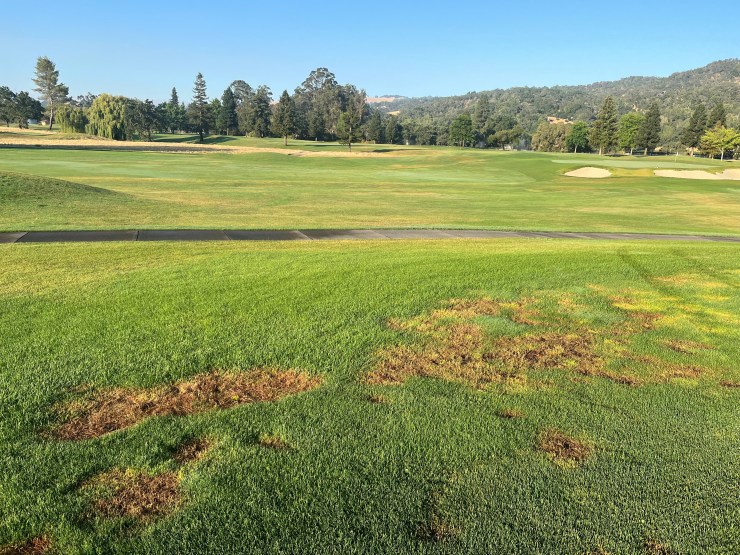
One of the areas that you are recently seeing is damage from an herbicide application. Below is a picture of that damage in the 6/12 area. We are seeding and sanding those areas and expect a quick recovery.
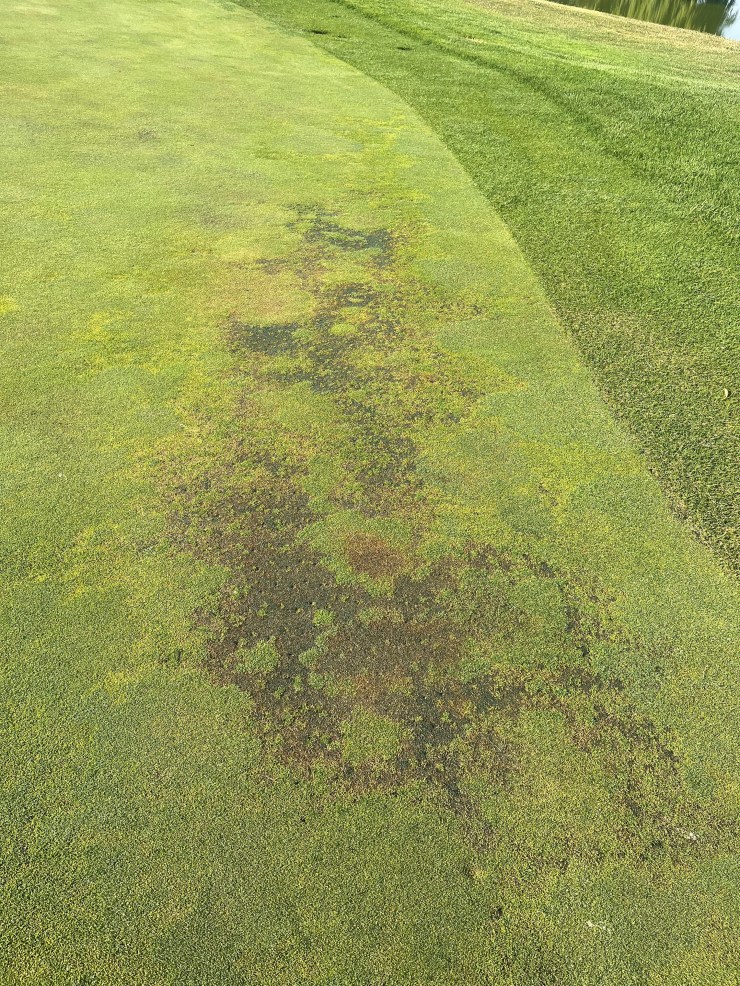
I have had questions regarding concerns of the heat and areas showing stress on the greens. As many of you know, we have a large percentage of a cool-season grass on our putting surfaces called Poa annua. When we have long term heat like we are seeing this July, this shallow rooted species does not handle those conditions well. We have backed off some of our regular maintenance practices such as rolling and verticutting to get them through this period. In the picture below you see the largest area of damage on the 13th green. Once we get through this heat spell, well will plug this and any area of significant damage with bentgrass sod from our nursery by #2 green. Fortunately, I believe many of these areas will recover on their own once temperatures moderate.
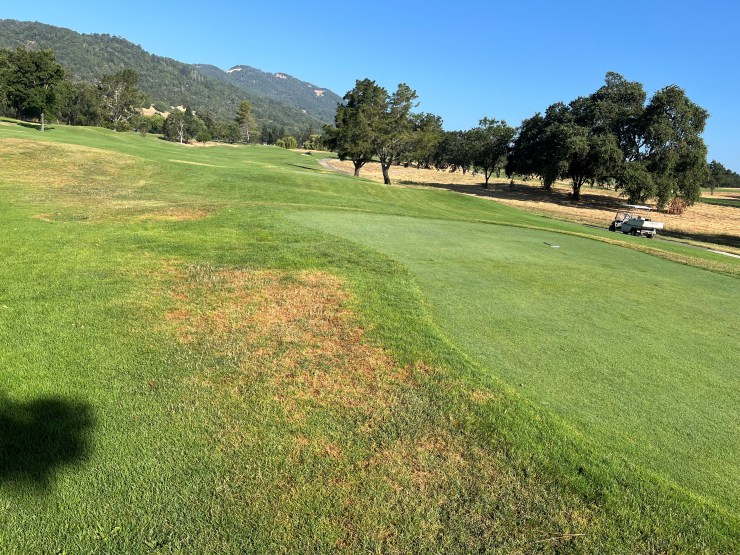
Another item that warrants discussion is the Southern Blight disease you are seeing throughout the property. The disease cycle of southern blight involves the pathogen, Athelia rolfsii, producing abundant sclerotia that serve as survival structures in soil and thatch. Germination of these sclerotia occurs in warm and moist conditions. The pathogen spreads rapidly through thatch or soil and can infect the plant canopy. It is easily transmitted from infected turf to surrounding areas, causing secondary infections and the formation of satellite rings around older patches. Infected plants experience a loss of cellular integrity, resulting in chlorosis, gray discoloration, and eventually reddish-brown death. Sclerotia are formed on dead grass and in thatch, where they can persist for extended periods of time. I can remember spot spraying a few areas back in 2005. Since then, it has increased its presence throughout the property. Some of the worst areas are 2,13, 16 fairways, but you can see it throughout the property. We currently start preventative sprays the first week of June, but with the changing weather patterns, we will move that to the first week of May next year. The acreage that needs treated increases every year due to its ability to transmit easily. We currently treat fairways and one pass around them. This is not an inexpensive treatment, so it is impossible to spray the entire golf course. We will continue to map and monitor and treat accordingly in the future. As far as recovery in the diseased areas, this will happen with the fall aerification which will include interseeding into those areas. We are in discussion with The Escalante agronomic team to increase our seeding rates to not only promote recovery but introduce a quality turfgrass to help withstand the properties challenges. The cooler fall temperatures are more conducive for the seed’s chance of survival. During the hot summer months, the young seedlings struggle from the sodium induced wilt.
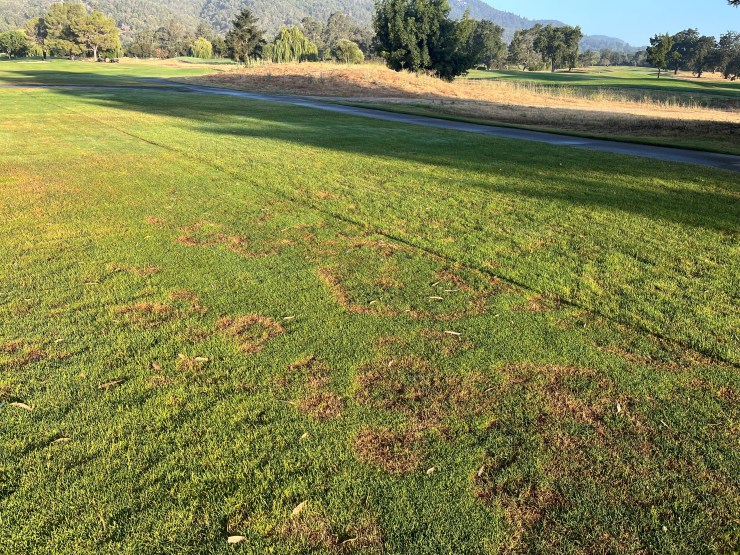
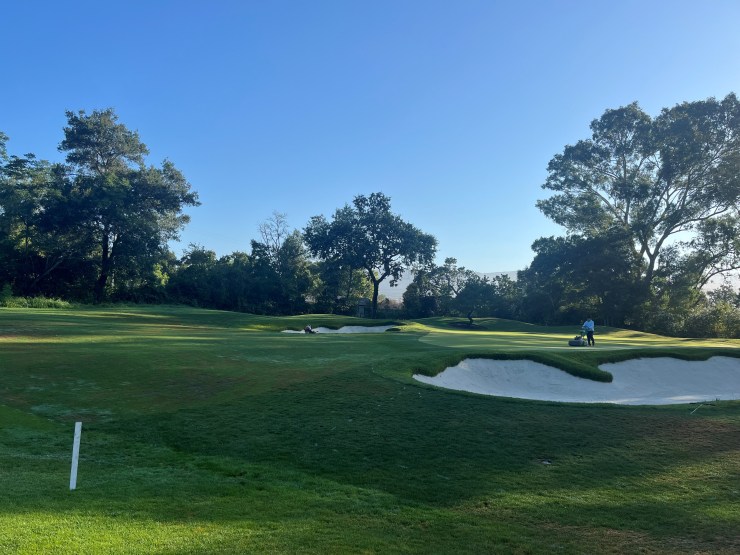
The last item of discussion is the condition of the #8 approach. What we are seeing is not acceptable and we will take steps immediately to improve this area. This will include roping it off and playing as Ground Under Repair until we mature this area fully before we reopen it. The cool season grasses have always struggled in this area which is why it was mostly common Bermuda before the bunker renovation. We will experiment with a couple of turf varieties in the re-seeding process to determine which will handle the local environmental conditions the best.
Hopefully this information enlightens you on current course conditions and some of the obstacles this property delivers. On a side note, we had one of the agronomy team members from Escalante here a couple of weeks ago to show and discuss the challenges we face here in the summer months. I plan on doing a weekly blog for the time being to keep everyone up to date. We will close the course completely August 5th and 19th to allow for needed procedures which are difficult to accomplish among play.
Yours in turf,
Stacy L. Wallace, Class A Golf Course Superintendent
 Sonoma Agronomy
good stuff, Stacey. Thanks for the update. Keep up the fight.
John Wilson
LikeLike